Find High Gain Outdoor TV Antenna for Broadcasting, TV, and Radar
Explore 30 high gain outdoor TV antenna options to compare specifications like VSWR, impedance, and material. This guide helps buyers evaluate directional and surface antenna models for various communication and broadcasting applications; compare the available evidence and request quotations based on your requirements.
Key considerations
Products List


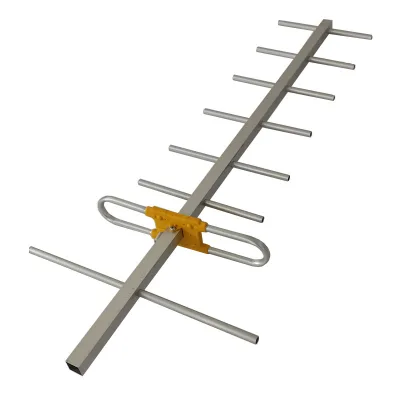
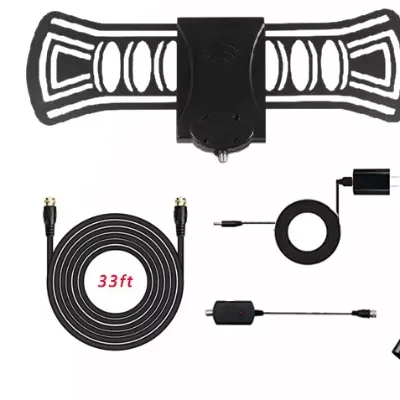
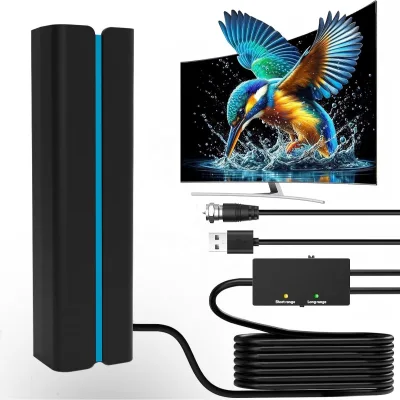


Comprehensive Sourcing Guide
High Gain Outdoor TV Antenna Sourcing Guide
Procuring high gain outdoor TV antennas requires distinguishing between directional and surface configurations based on specific site constraints. The available product data indicates a strong presence of directional antennas designed for base station applications, alongside surface-mounted units optimized for specific polarization needs. Buyers must verify whether the intended installation environment demands a wire antenna structure or a solid surface form, as these structural differences directly impact signal capture efficiency and mounting requirements.
Commercial listings reveal a wide variance in model specifications, ranging from compact units to large-scale arrays with dimensions exceeding one meter. Sourcing decisions should prioritize models that explicitly state their operating wavelength and impedance, such as the 75-ohm variants observed in the catalog. Understanding the distinction between receiving antennas and those designed for broader communication or radar applications is essential to ensure the selected hardware aligns with the specific frequency bands required for the target deployment.
Product Scope and Observed Listing Signals
The observed product range includes diverse models like the GLAV series and various antenna codes, each tailored for different operational wavelengths including microwave and medium wave frequencies. Buyers should note that some listings specify a VSWR below 1.5, indicating high efficiency, while others show a range of 1.5 to 2, which may require different matching networks or signal processing. This variation necessitates a careful review of the specific model number to confirm the performance characteristics match the intended signal environment.
Packaging and physical dimensions vary significantly across the catalog, with some units shipped in cartons while others utilize polibags or specific metric dimensions like 532924cm. The material composition is another critical signal, with aluminum and copper options available, influencing both durability and conductivity. Procurement teams must align the physical form factor and material choice with the environmental conditions of the installation site to ensure long-term reliability and resistance to weathering.
Technical Specifications to Verify
Verifying the impedance and polarization characteristics is the first step in validating technical suitability for a specific network. The data confirms the availability of 75-ohm impedance models and vertical polarization options, which are standard for many television broadcasting applications. Buyers must ensure that the selected antenna's impedance matches the transmission line and receiver input to minimize signal reflection and maximize power transfer, as mismatches can lead to significant performance degradation.
Dimensionality and operating wavelength are equally critical parameters that define the antenna's spatial and spectral performance. Listings indicate both one-dimensional and two-dimensional antenna structures, alongside specific operating wavelengths such as short wave and microwave bands. It is imperative to cross-reference the model's stated wavelength against the local broadcast spectrum to avoid purchasing hardware that operates outside the required frequency range, ensuring optimal reception for the intended service.
Compliance and Safety Documentation
While specific certification statuses are not universally confirmed in the provided data, buyers must request evidence of compliance with relevant safety and electromagnetic standards. The presence of ABS and copper material specifications suggests a focus on structural integrity, but formal documentation regarding environmental testing and electrical safety is required before finalizing any bulk order. Procurement teams should explicitly ask for test reports that validate the antenna's performance under the claimed operating conditions and environmental stresses.
Warranty terms and high-definition capabilities are listed as specific attributes for certain models, providing a baseline for quality assurance. A one-year warranty is noted for some units, which serves as a minimum benchmark for supplier confidence in product longevity. However, buyers should not assume all listed products carry this warranty or meet high-definition standards without written confirmation, as these attributes may vary by specific model and manufacturing batch.
Cost Drivers and Commercial Terms
The observed price range spans from $0.30 to $36,000, reflecting the vast difference between simple wire antennas and complex, high-gain array systems. This disparity is driven by factors such as material costs, specifically the use of copper versus aluminum, and the complexity of the antenna structure. Buyers must analyze the total cost of ownership, considering that higher-priced units often offer superior gain and durability, which can reduce long-term maintenance and replacement expenses.
Minimum Order Quantities (MOQ) vary from 1 to 3,000 units, offering flexibility for both pilot projects and large-scale deployments. The customization options available allow buyers to tailor specifications, but this flexibility often impacts the commercial terms and lead times. Procurement strategies should account for the MOQ thresholds to optimize unit economics, ensuring that the order volume justifies the customization effort while maintaining a competitive price point per unit.
Supplier Qualification and Quality Control
Supplier qualification should focus on the ability to provide consistent product attributes across different batches, particularly regarding material composition and structural form. The data shows a mix of aluminum and copper materials, as well as wire and surface antenna structures, indicating a diverse manufacturing capability. Buyers must verify that the supplier can consistently deliver the specific material and form factor required, as inconsistencies can lead to performance variations that are difficult to troubleshoot in the field.
Quality control processes must be validated through the supplier's ability to maintain strict adherence to the listed technical specifications, such as VSWR and impedance values. The presence of specific model numbers and standard dimensions suggests a structured production line, but buyers should request quality assurance protocols that cover the entire manufacturing process. Ensuring that the supplier has robust testing procedures in place is essential to prevent the delivery of units that fail to meet the claimed performance standards.
Long-Term Procurement Checks
Long-term procurement success depends on establishing a clear verification process for the antenna's durability and performance over time. Buyers should monitor the supplier's ability to maintain the specified dimensions and material properties, as environmental exposure can degrade performance if the initial quality was marginal. Regular audits of the product's physical condition and signal performance are necessary to ensure that the antennas continue to meet the operational requirements of the network.
The availability of customization and specific warranty terms provides a foundation for ongoing supplier relationships, but these must be actively managed. Buyers should track the supplier's responsiveness to warranty claims and their ability to provide replacement units that match the original specifications. Maintaining a detailed record of model performance and supplier interactions will help identify trends and ensure that future procurement decisions are based on reliable, real-world data rather than initial marketing claims.
FAQs
What is the typical VSWR for high gain outdoor tv antennas
The typical VSWR for these antennas is less than 1.5, which indicates efficient signal transfer. Some models may have a VSWR range of 1.5 to 2.0. Lower VSWR values generally result in better reception quality and reduced signal loss during transmission.
Which materials are commonly used in high gain outdoor tv antennas
Aluminum and copper are the primary materials used in these antennas. Aluminum offers a good balance of weight and durability for outdoor use, while copper provides excellent conductivity. The choice of material can affect the antenna's performance and longevity in various weather conditions.
What is the standard impedance for high gain outdoor tv antennas
The standard impedance for these antennas is typically 75 ohms. This impedance matches most standard TV receiver inputs, ensuring optimal signal transfer. Using an antenna with the correct impedance prevents signal reflection and maintains high reception quality.
Can high gain outdoor tv antennas be customized for specific needs
Yes, customization is available for high gain outdoor tv antennas. Buyers can request specific colors, dimensions, or configurations to suit their installation requirements. Customization options may include adjusting the number of elements or modifying the mounting hardware for better fit.
What is the operating wavelength range for high gain outdoor tv antennas
These antennas operate across microwave and medium wave frequencies. Some models are specifically designed for short wave applications. The operating wavelength determines the range of channels the antenna can receive, making it suitable for various broadcasting standards.
How does the structure form affect high gain outdoor tv antenna performance
The structure form, such as wire or surface antennas, impacts performance and installation. Wire antennas are often directional and offer high gain, while surface antennas may be more compact. The choice depends on the desired signal strength and available installation space.
What is the typical packaging for high gain outdoor tv antennas
These antennas are usually packed in cartons or polybags. Standard carton dimensions are approximately 53 by 29 by 24 cm. Proper packaging ensures the antenna remains protected during shipping and storage, preventing damage to sensitive components.